
Hair Shedding vs Hair Loss: What’s Normal?
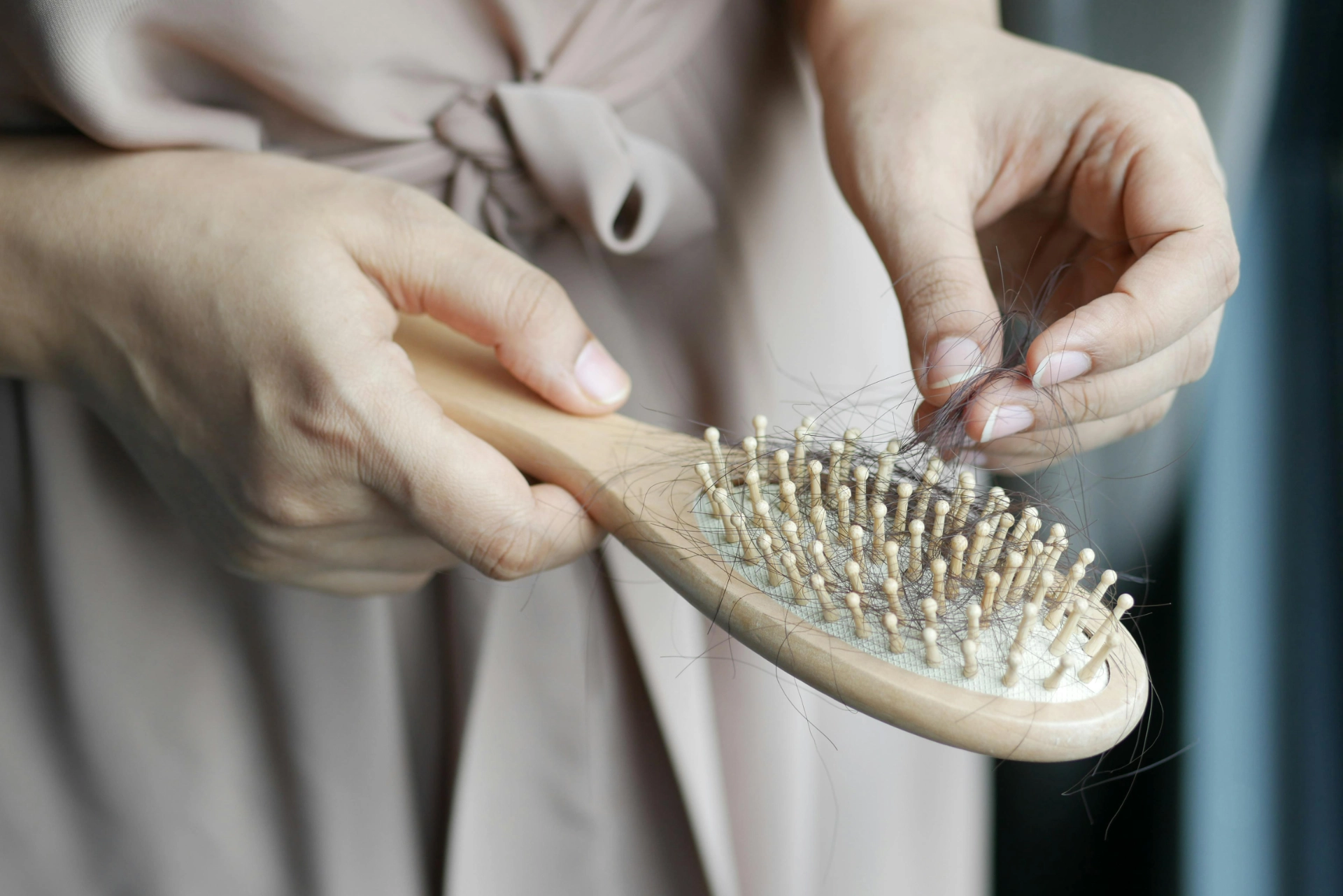
If you’re a bit anxious because this morning you noticed more hair than usual in the drain when you stepped out of the shower, then found yourself examining your brush a little too closely, and now you’re noticing a few more strands in your pillow or sweatshirt, well, welcome to the club. For many women, hair changes can feel sudden, confusing, and even disturbing.
The good news? Not all hair falling out means hair loss. In fact, some shedding is completely normal. The key is knowing what’s expected, what’s not, and when it might be time to take a closer look.
As an in-home salon service working with women throughout the Main Line and Philadelphia suburbs, we have these conversations every day. Let’s break it down in a way that’s honest, reassuring, and actually helpful.
Hair Shedding vs Hair Loss: What’s the Difference?
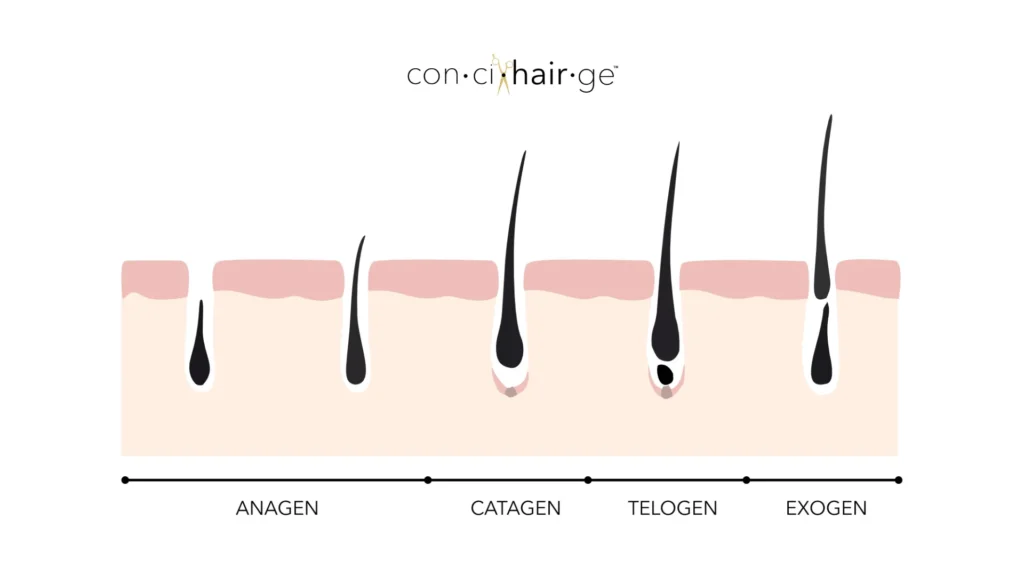
Although they’re often used interchangeably, hair shedding and hair loss are not the same thing. To understand what’s normal and what’s not, first we need to understand the regular cycle of hair growth. It is divided into 4 stages, namely:
- Anagen, growing phase
- Catagen, transition phase
- Telogen, resting phase, and
- Exogen, shedding phase
What Is Normal Hair Shedding?
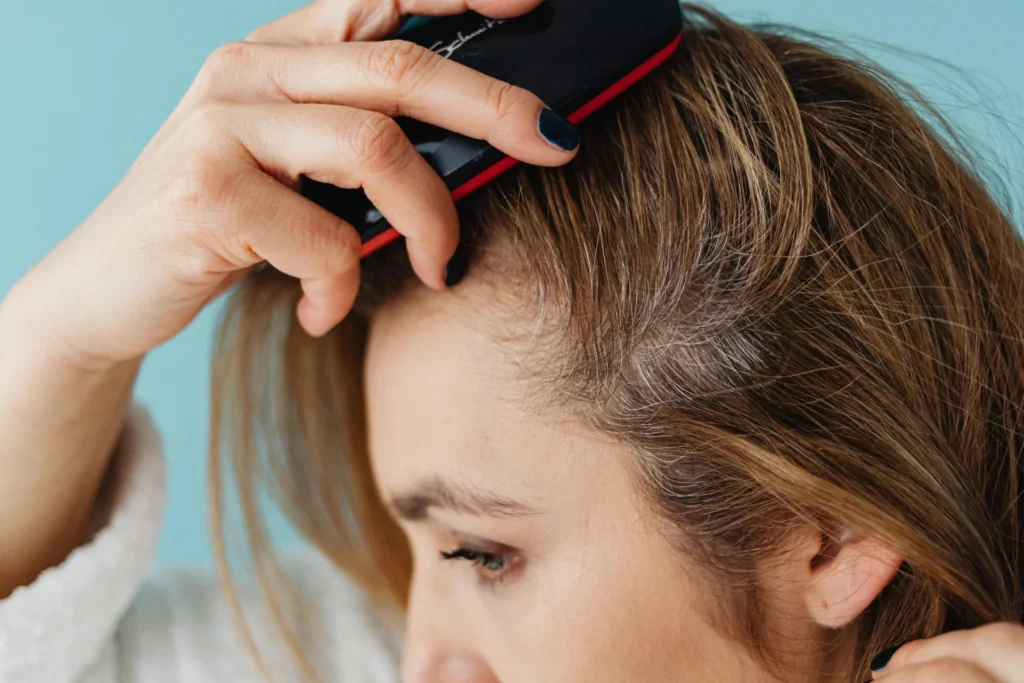
As we just mentioned, hair naturally grows in cycles. At any given time, some hairs are growing, some are resting, and some are shedding to make room for new growth. Because of this cycle, it’s completely normal to lose hair every day, often more than you expect.
Many women notice increased shedding during:
- Seasonal changes (especially fall and spring)
- Periods of stress or illness
- Hormonal shifts
- Changes in diet or routine
Seeing hair in your brush, on your clothes, or in the shower doesn’t automatically mean something is wrong. Often, it’s simply your body doing what it’s designed to do.
What Is Hair Loss?
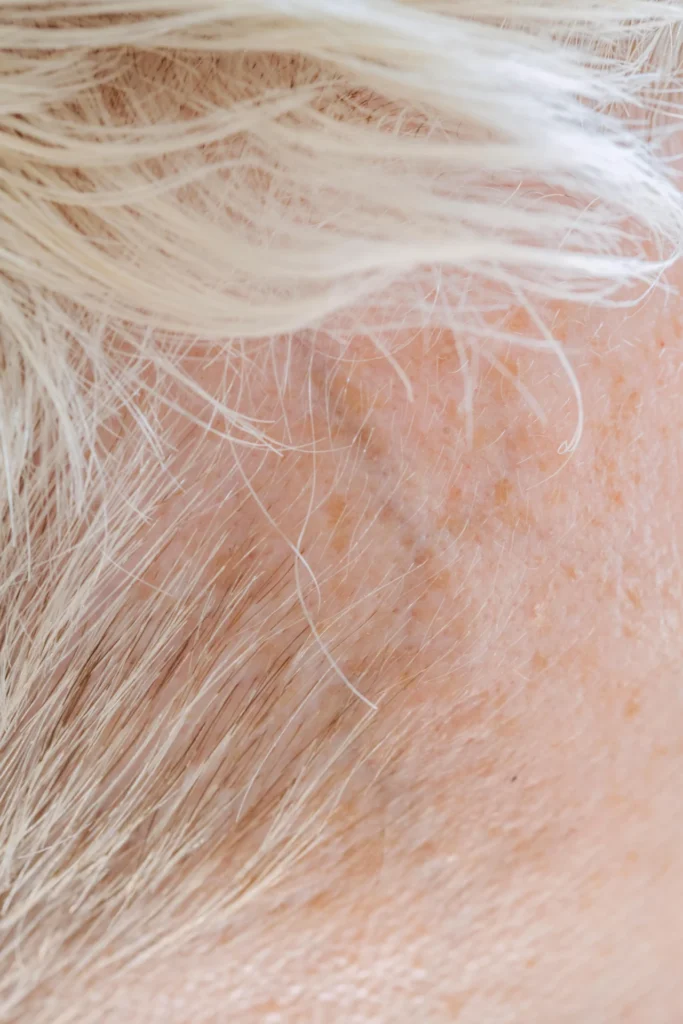
Hair loss is different. Instead of shedding and regrowing, the hair begins to thin over time. You may notice:
- A wider part
- A thinner ponytail
- Reduced volume that doesn’t bounce back
- Hair that doesn’t seem to grow the way it used to
Hair loss tends to be more gradual and persistent, and it doesn’t resolve on its own the way temporary shedding often does.
Why Women from 35 to 55 Notice It More
For many of us, hair concerns become more noticeable in our late 30s, 40s, and early 50s, and there’s a reason for that.
Hormonal shifts associated with perimenopause and menopause, can affect the hair growth cycle, often leading to increased shedding or finer strands.
This doesn’t mean something is “wrong” with you, but it means your hair is responding to changes happening inside your body and lifestyle.
What’s Not Normal: Signs It’s Time to Pay Attention
While shedding is common, there are times when it’s worth paying closer attention. Your hair could be a powerful signal for your overall health. You may want to seek professional guidance if you notice:
- Excessive shedding lasting longer than two to three months
- Sudden, noticeable thinning at the crown or hairline
- A ponytail that feels significantly smaller
- Hair breaking easily rather than shedding from the root
- Changes in your scalp, such as irritation or sensitivity
Catching these changes early can make a meaningful difference.
How Your Hairstylist Can Be Your First Line of Insight
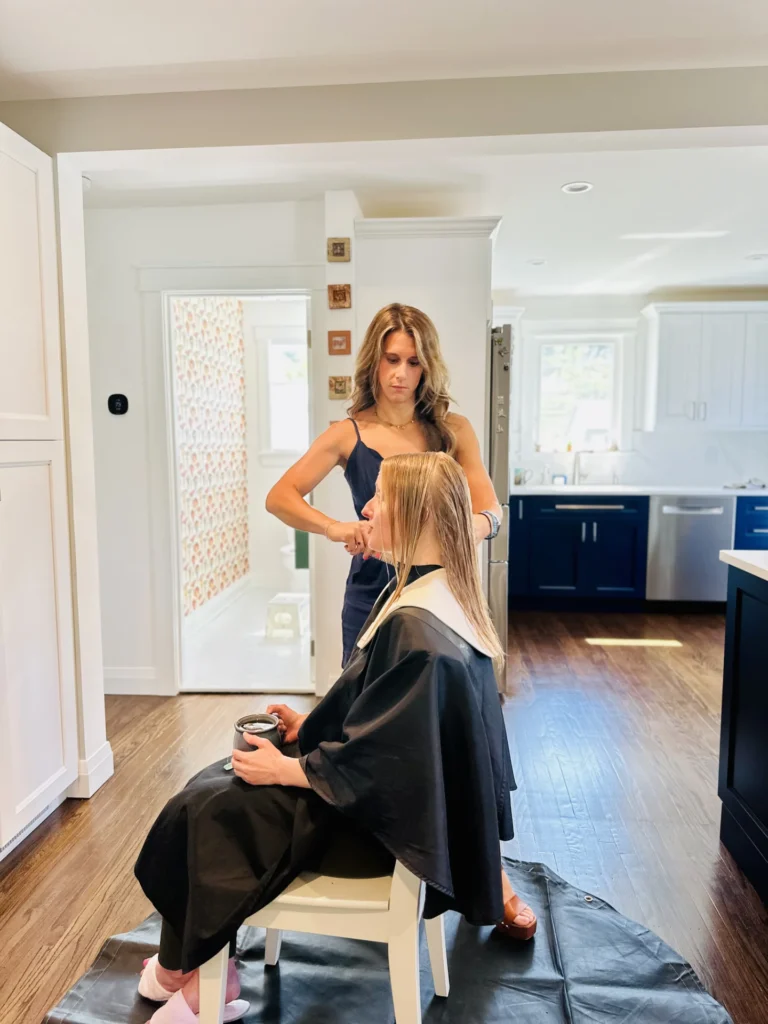
One of the most overlooked resources in understanding hair changes is your hairstylist. A professional who sees your hair regularly can spot subtle shifts in texture, density, and growth patterns long before they become obvious to you.
With in-home hair salon services, this insight becomes even more valuable. Appointments are unhurried, personal, and focused entirely on you, without the noise and distractions of a traditional salon. It also allows for private, honest conversations about concerns many women feel uncomfortable discussing publicly.
At Concihairge, our stylists don’t just make your hair look beautiful, they help you understand it and teach you how to work with it day-to-day with the tools you have at home.
Gentle Hair Care Habits That Support Healthy Hair

While there’s no magic fix, small changes in your routine can support healthier hair over time:
- Be gentle when brushing and detangling, especially when wet. Ask your Concihairge hairstylist to teach you the best practices and tools for brushing and detangling.
- Avoid excessive heat styling when possible
- Focus on scalp health, not just ends. Your Concihairge hairstylist can advise you on proper washing and routines to help your scalp.
- Don’t panic-wash or over-treat shedding hair
- Skip harsh DIY solutions that promise instant results. Hair health is a marathon not a sprint. If it sounds too good to be true, it probably is.
Personalized guidance from a professional can help you avoid unnecessary damage and frustration.
The Bottom Line
Hair shedding can be normal. Hair loss can be manageable. And most importantly, you’re not imagining what you’re seeing.
Understanding what’s happening is the first step toward caring for your hair with confidence instead of fear. With the right support, education, and professional guidance, you can navigate hair changes without feeling overwhelmed.
If you’re noticing changes in your hair and want expert guidance in the comfort of your own home, Concihairge is here for you. Our in-home stylists are ready to offer thoughtful, personalized care designed around your life.
Book your in-home hair appointment today and let us bring the expertise and peace of mind you deserve.
Proudly serving women throughout the Main Line and Philadelphia suburbs, including West Chester, Villanova, Wayne, Berwyn, Malvern, Bala Cynwyd, King of Prussia, Ambler, Bryn Mawr, Gladwyne, Chestnut Hill, Haverford, Newtown Square, Blue Bell, and Conshohocken.